


Is GM Super Cruise a True Hands-Free Driving System?
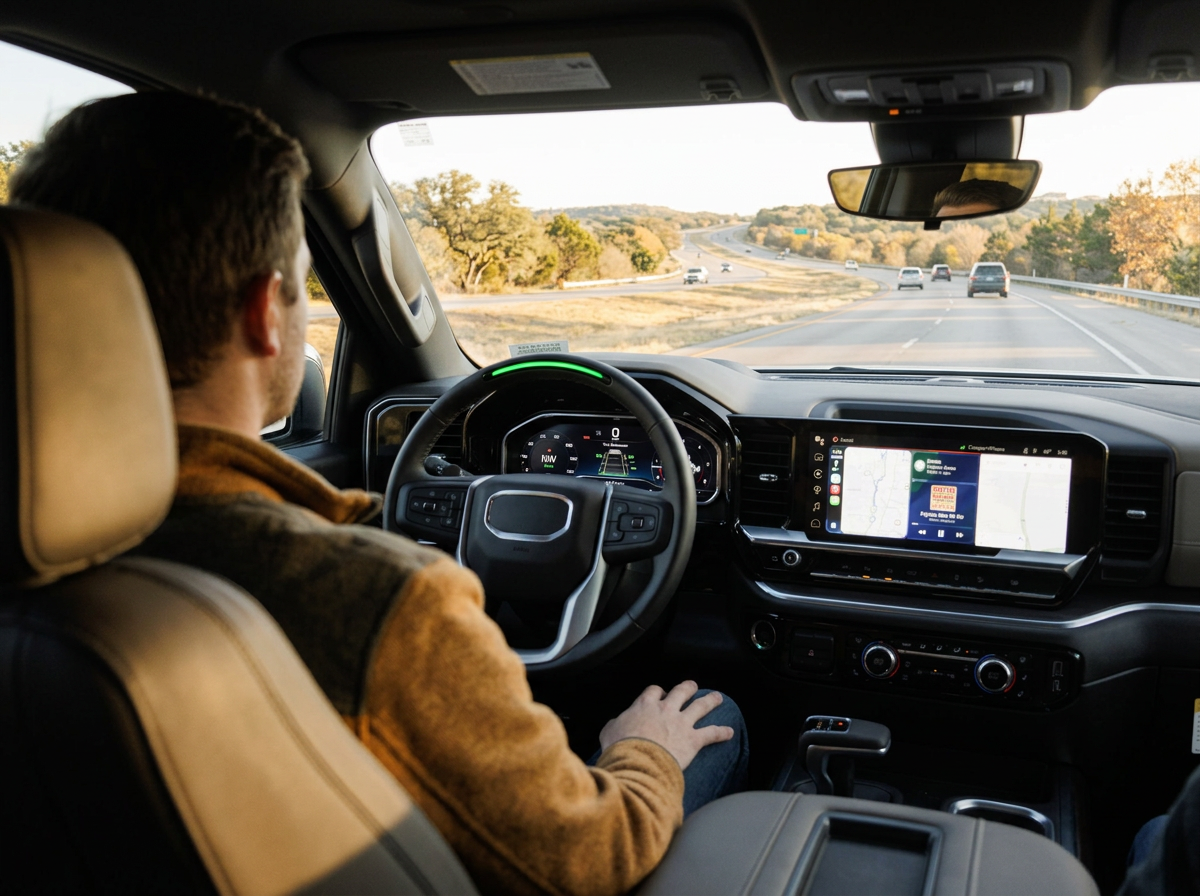
GM Super Cruise is a true hands-free driver assistance system engineered for compatible pre-mapped highways. When active under appropriate driving conditions, the technology manages vehicle steering, acceleration, and braking without requiring your hands on the wheel. However, Super Cruise is not an autonomous driving system; it requires an attentive driver whose head and eyes remain focused on the road, continuously monitored by an optical internal attention camera.
Vehicles equipped with Super Cruise rely on a multi-layered sensor suite that combines precision high-definition LiDAR highway maps, real-time optical cameras, long-range radar, and GPS positioning. This combination maintains lane positioning and vehicle spacing far more consistently than standard lane-centering assistance systems. System operational status displays directly on the steering wheel light bar, providing clear visual feedback:
- Solid green indicates active hands-free guidance.
- Flashing green alerts the driver to look back at the roadway ahead.
- Flashing red commands immediate driver manual takeover.
If a driver does not take manual steering control during a red alert, Super Cruise gradually decelerates the vehicle in its lane to a safe stop and automatically connects to an emergency advisor through embedded vehicle connectivity. For drivers commuting through Austin along highway corridors like US-183, this multi-stage safety network offers calm, controlled highway travels. If you have questions about experiencing this technology firsthand, you can find our Austin showroom address online or give our sales team a quick call to set up a test drive.
Table of Contents
- How Does GM Super Cruise Work in Buick and GMC Vehicles?
- Which Buick and GMC Models Offer Super Cruise?
- Does Super Cruise Support Hands-Free Towing and Automatic Lane Changes?
- How Do Super Cruise Map Updates and OnStar Connectivity Work?
- How Does GM Super Cruise Compare to Tesla Autopilot and Full Self-Driving?
- Frequently Asked Questions About Buick and GMC Super Cruise
How Does GM Super Cruise Work in Buick and GMC Vehicles?
On highways mapped with high-definition data, GM Super Cruise uses a combination of sensors and cameras to keep the vehicle centered in its lane. The system cross-references active GPS location coordinates against an onboard 3D LiDAR map database covering hundreds of thousands of miles of divided and non-divided highways across North America. Optical cameras detect lane markings, while radar units measure relative distance and speed relative to surrounding traffic.
To engage Super Cruise in a Buick or GMC vehicle, specific prerequisite safety systems must be configured within the infotainment menu:
- Adaptive Cruise Control must be turned ON.
- Forward Collision System must be set to Alert and Brake.
- Teen Driver mode must be turned OFF.
When the vehicle detects that it is traveling on a pre-mapped compatible highway with clear lane markings and good sensor visibility, a white Super Cruise icon appears on the driver display cluster. Pressing the Super Cruise button on the steering wheel turns the icon and steering wheel light bar solid green, signaling that you may remove your hands from the wheel.
The internal Driver Attention System uses infrared light to track eye gaze and head orientation, operating reliably even when the driver wears sunglasses. If direct sunlight, cabin obstructions, or improper steering column adjustment block the attention camera, the instrument cluster displays an alert prompting you to adjust your seating position or take manual wheel control. Drivers evaluating new Buick models or exploring pre-owned inventory can verify system setup procedures directly during a comprehensive vehicle walk-around.
Which Buick and GMC Models Offer Super Cruise?
Super Cruise is available across an expanding lineup of premium Buick and GMC trucks and SUVs, offered either as standard equipment on upper-tier trims or as an available package option. In the GMC lineup, hands-free highway capability comes standard on the Denali, Denali Ultimate, AT4, and AT4X trims of the Sierra 1500 pickup, while remaining available on the Elevation trim. Full-size family vehicles like the GMC Yukon offer Super Cruise across higher trim levels, starting at an MSRP of $80,400 (MSRP may vary by trim, equipment, and availability).
For electric pickup enthusiasts, the 2026 GMC Sierra EV integrates Super Cruise across multiple battery configurations and trim levels:
- AT4 Extended Range Crew Cab e4WD: 8,157 lbs curb weight, 1,950 lbs payload, 12,300 lbs towing, about 11 cu ft cargo space.
- AT4 Max Range Crew Cab e4WD: 8,867 lbs curb weight, 1,500 lbs payload, 10,200 lbs towing, about 11 cu ft cargo space.
- Denali Extended Range Crew Cab e4WD: 8,157 lbs curb weight, 1,700 lbs payload, 12,500 lbs towing, about 11 cu ft cargo space.
- Denali Max Range Crew Cab e4WD: 8,867 lbs curb weight, 1,500 lbs payload, 10,200 lbs towing, about 11 cu ft cargo space.
- Denali Standard Range Crew Cab e4WD: 7,573 lbs curb weight, 2,250 lbs payload, 8,500 lbs towing, about 11 cu ft cargo space.
- Elevation Extended Range Crew Cab e4WD: 8,157 lbs curb weight, 1,700 lbs payload, 12,500 lbs towing, about 11 cu ft cargo space.
- Elevation Standard Range Crew Cab e4WD: 7,573 lbs curb weight, 2,250 lbs payload, 8,500 lbs towing, about 11 cu ft cargo space.
In the Buick portfolio, the three-row 2026 Buick Enclave features Super Cruise as an option starting at an MSRP of $60,000 across Preferred, Sport Touring, and Avenir trims. To explore available configurations, buyers can browse new GMC inventory or schedule a service appointment for system diagnostic checks and software validation.
Dimensions & Capacity
Capacity and dimensions by trim
| Feature | AT4 Extended Range Crew Cab e4WD | AT4 Max Range Crew Cab e4WD | Denali Extended Range Crew Cab e4WD | Denali Max Range Crew Cab e4WD |
|---|---|---|---|---|
| :– | :– | :– | :– | :– |
| Seating | 5 | 5 | 5 | 5 |
| Cargo | 11.0 cu ft | 11.0 cu ft | 11.0 cu ft | 11.0 cu ft |
| Curb weight | 8,157 lbs | 8,867 lbs | 8,157 lbs | 8,867 lbs |
| Towing | 12,300 lbs | 10,200 lbs | 12,500 lbs | 10,200 lbs |
| Payload | 1,950 lbs | 1,500 lbs | 1,700 lbs | 1,500 lbs |
Dimensions & Capacity (continued)
| Feature | Denali Standard Range Crew Cab e4WD | Elevation Extended Range Crew Cab e4WD | Elevation Standard Range Crew Cab e4WD |
|---|---|---|---|
| :– | :– | :– | :– |
| Seating | 5 | 5 | 5 |
| Cargo | 11.0 cu ft | 11.0 cu ft | 11.0 cu ft |
| Curb weight | 7,573 lbs | 8,157 lbs | 7,573 lbs |
| Towing | 8,500 lbs | 12,500 lbs | 8,500 lbs |
| Payload | 2,250 lbs | 1,700 lbs | 2,250 lbs |
Does Super Cruise Support Hands-Free Towing and Automatic Lane Changes?
Super Cruise supports hands-free driving while towing on specially equipped GMC trucks and full-size SUVs, including the Sierra 1500, Sierra EV, Yukon, and Hummer EV. When a trailer is properly connected, the vehicle’s control software automatically recalculates drag and total mass to adjust drag, acceleration rates, and stopping distances. This ensures smooth lane centering and stable headway tracking even with heavy loads attached.
Advanced Super Cruise configurations also feature Automatic Lane Change and Lane Change on Demand functionality:
- Lane Change on Demand allows the driver to tap the turn signal stalk, prompting the vehicle to verify an open gap in adjacent traffic and steer into the neighboring lane automatically.
- Automatic Lane Change monitors traffic flow ahead and moves into an open passing lane if the current lane is moving below the set cruise speed, later returning to the original lane once clear.
While trailering, however, turn-signal-activated and automatic lane changes are automatically disabled by the vehicle’s control logic. Drivers towing equipment along I-35 near Round Rock must manually execute lane changes by taking physical control of the steering wheel. Once the truck and trailer are re-centered in the new lane with the light bar returning to solid green, Super Cruise hands-free steering resumes. Drivers planning to upgrade their towing rig can value your trade-in online to establish trade equity prior to selecting an optioned vehicle.
How Do Super Cruise Map Updates and OnStar Connectivity Work?
Super Cruise relies on an active cellular data connection provided through OnStar to maintain positioning precision and perform over-the-air road map updates. GM frequently updates its high-definition LiDAR network as highways undergo construction, lane reconfiguration, or speed limit modifications. These map patches stream automatically to the vehicle’s embedded memory, ensuring that the active drive system never operates on outdated lane geometry.
Key connectivity requirements for Super Cruise operation include:
- An active OnStar Super Cruise plan or trial package.
- Operational vehicle electrical architecture, GPS reception, and cellular signal.
- Verified Wi-Fi hotspot connectivity settings within the vehicle menu.
Most new Super Cruise-equipped GMC and Buick models include three years of connected services upon purchase. If the active subscription lapses after the trial period, hands-free steering disengages. However, standard chassis safety features remain completely active, including standard Adaptive Cruise Control and conventional lane-keeping assistance. Drivers looking to manage connected vehicle options or structure their vehicle purchase can submit a credit application through our digital finance center.
How Does GM Super Cruise Compare to Tesla Autopilot and Full Self-Driving?
GM Super Cruise differs fundamentally from Tesla driver assistance systems in driver monitoring, operational philosophy, and road mapping architecture. Super Cruise utilizes an infrared driver-facing camera to track eye gaze, permitting true hands-free steering on compatible highways. By contrast, Tesla Autopilot and FSD require physical steering wheel torque sensing, prompting drivers to physically nudge the wheel to verify active participation.
System architecture differences between the two systems highlight contrasting engineering priorities:
- Super Cruise operates inside a geofenced, LiDAR-mapped network of divided highways, ensuring high repeatability and preventing engagement on unmapped city streets or unpredictable rural roads.
- Tesla systems rely purely on optical camera vision without pre-mapped LiDAR geometry, attempting to navigate all road types, intersections, and unmapped city streets dynamically.
- Super Cruise includes automated fallback protocols that bring the vehicle to a safe stop within its lane and summon emergency dispatch if a driver becomes unresponsive, whereas Tesla systems disengage without built-in emergency call center escalation.
By restricting hands-free functionality to mapped highways and enforcing eye monitoring, Super Cruise delivers stable, predictable assistance that minimizes driver fatigue on long highway stretches.
Frequently Asked Questions About Buick and GMC Super Cruise
Q: What happens if a driver becomes non-responsive while Super Cruise is engaged?
If the Driver Attention System detects that the driver’s eyes are off the road, the steering wheel light bar flashes green, followed by a flashing red light accompanied by seat vibrations or audible beeps. If the driver fails to take physical control after the red alert, a voice prompt sounds, and the vehicle gradually slows to a complete stop within its travel lane. Hazard lights activate automatically, and an Emergency-Certified OnStar Advisor calls into the cabin to dispatch assistance if necessary.
Q: Can Super Cruise bring a Buick or GMC vehicle to a complete stop?
Super Cruise manages full stop-and-go highway traffic, bringing the vehicle to a complete stop when trailing traffic halts and resuming acceleration automatically when traffic moves forward. However, Super Cruise does not detect or respond to stop signs, red traffic lights, or cross-traffic at intersections. Drivers must manually apply the brakes and steer when approaching highway intersections, toll booths, or exit ramps.
Q: What specific vehicle settings must be turned on to enable Super Cruise?
To enable Super Cruise, Adaptive Cruise Control must be turned ON in the vehicle settings, and Forward Collision System must be set to Alert and Brake. Additionally, Teen Driver mode must be deactivated. If any of these prerequisite settings are misconfigured, or if camera/radar sensors are obstructed by road grime, the cluster display will indicate that Super Cruise is unavailable.
Q: Does Super Cruise work in construction zones or poor weather?
Super Cruise disengages or prevents engagement in active construction zones, tunnels, or severe weather conditions. Heavy rain, snow, ice, or intense sun glare reflecting off wet pavement can obscure lane markings or block optical sensors. When sensor visibility drops below operational thresholds, the system issues a takeover prompt requesting immediate manual steering.
Q: What happens to Super Cruise functionality if the OnStar subscription expires?
If the required OnStar Super Cruise plan or initial three-year connectivity package expires without renewal, hands-free steering functionality becomes unavailable. The vehicle cluster will display a “GPS Signal Lost” or “Subscription Required” message when attempting to activate the system. Standard Adaptive Cruise Control and standard Forward Collision Alert remain fully functional without an active subscription.
For additional details on vehicle features or to test-drive an optioned truck or SUV, visit our Research Boulevard facility, give our team a quick call, or learn more about our team online today.
© 2026 Covert Buick GMC. All rights reserved.
