



Why Is Routine Tire Rotation Important for Your Vehicle?
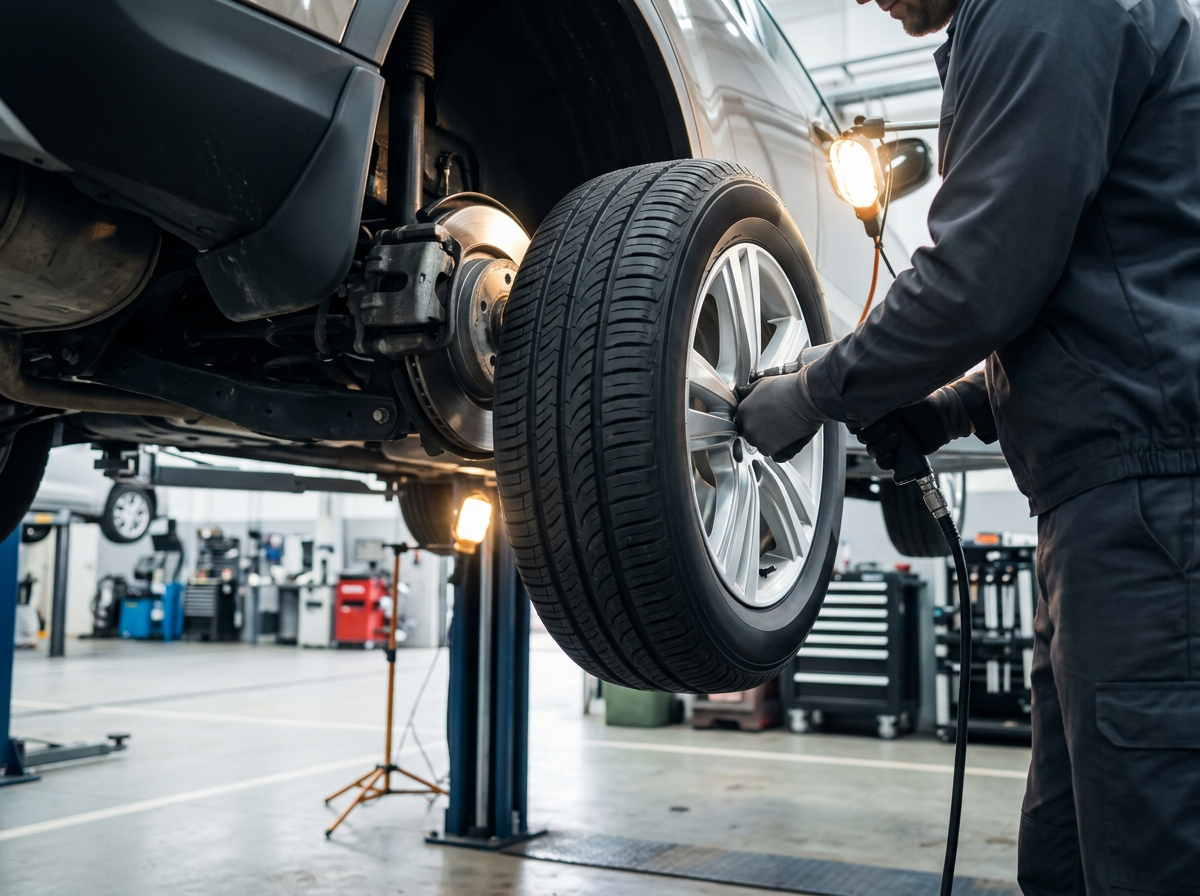
Routine tire rotation is essential because front and rear tires wear down at different rates due to steering forces, engine weight distribution, and braking loads. Periodically swapping the positions of your tires spreads tread wear evenly across all four wheels, maximizing tire lifespan, preserving vehicle handling performance, protecting drivetrain components, and keeping your manufacturer tread wear warranty valid.
Front tires experience significantly higher friction than rear tires on most vehicles. Steering maneuvers, heavy front-end weight from the engine and transmission, and primary braking forces cause the outer and inner edges of front tire treads to wear much faster. Rear tires, by contrast, mostly follow in a straight line with minimal lateral force. By systematically shifting front tires to the rear axle and rear tires to the front, you ensure that every tire experiences balanced wear across its entire tread face over time.
Driving on unevenly worn tires affects more than just replacement schedules. Severe tread variations compromise wet-road traction, increase braking distances, and create vibrations that stress wheel bearings, struts, and steering linkages. Commuters navigating the elevation shifts and quick stops across Austin experience variable lateral forces on front tires daily. Regular rotation prevents diagonal wiping, feathering, and edge wear, maintaining predictable stability on highway curves and rainy roads.
Maintaining a strict tire rotation schedule also protects your financial investment. Premium tires engineered for smooth ride quality and lower rolling resistance can reach 50,000 to 70,000 miles of service life when rotated correctly, but neglecting this service can ruin a set in fewer than 20,000 miles. Most tire manufacturers require documented proof of regular rotation intervals as a condition for treadwear warranty claims. To keep your vehicle driving smoothly, visit our service center on Research Boulevard or give our service advisors a call at (512) 518-6718.
Table of Contents
- How Often Should You Rotate Your Tires and Sync with Oil Changes?
- What Happens If You Do Not Rotate Your Tires Regularly?
- How Often Should Tires Be Rotated on All-Wheel Drive Vehicles?
- Should You Balance Tires Every Time You Rotate Them, and What Does It Cost?
- What Tools and TPMS Reset Steps Are Needed to Rotate Tires at Home?
- Common Questions About Tire Maintenance and Professional Care in Austin
How Often Should You Rotate Your Tires and Sync with Oil Changes?
You should rotate your vehicle’s tires every 5,000 to 7,500 miles or every six months, whichever milestone comes first. Synchronizing tire rotations with your scheduled oil change appointments creates a practical routine that keeps maintenance on track without requiring extra garage visits.
For vehicles utilizing standard oil change schedules, pairing a tire rotation with every oil service makes maintenance seamless. However, modern engines using high-grade full synthetic motor oil can frequently stretch oil change intervals to 10,000 miles. In these cases, waiting for an oil change to rotate your tires is too long. Tires running on the front axle for 10,000 miles without movement will develop uneven shoulder wear patterns that cannot be fully corrected later. If your vehicle runs on extended synthetic oil intervals, schedule an intermediate tire rotation service halfway between your oil appointments.
Different vehicle drivetrains and tire construction types require specific rotation patterns to optimize tread life:
- Forward Cross: Recommended for front-wheel drive vehicles. Front tires move straight back to the rear axle, while rear tires cross over to opposite sides on the front axle (rear right to front left, rear left to front right).
- Rearward Cross: Designed for rear-wheel drive and four-wheel drive vehicles. Rear tires move straight forward to the front axle, while front tires cross over to opposite sides on the rear axle.
- X-Pattern: Suitable for front-wheel drive passenger cars. All four tires cross diagonally (front left to rear right, front right to rear left, rear left to front right, rear right to front left).
- Same-Side Directional: Required for directional tires featuring one-way tread patterns. Tires move straight front-to-back on the same side of the vehicle to preserve tread rotation orientation.
Following the manufacturer-recommended pattern for your specific model prevents irregular rubber cupping and keeps rolling noise low throughout the life of your tire set.
What Happens If You Do Not Rotate Your Tires Regularly?
Skipping routine tire rotations leads to severe uneven tread wear, reduced fuel efficiency, compromised wet-weather traction, increased stopping distances, and premature tire replacement. Unrotated tires develop distinct structural wear patterns that degrade vehicle handling and cause unnecessary mechanical stress.
When tires remain in the same wheel position for extended mileage, front tires suffer heavy shoulder scrubbing from cornering while rear tires develop flat center sections. This friction disparity creates three primary types of irregular tread wear:
- Cupping: Scalloped dips or hollows carved along the tread edge, caused by unbalanced rotation forces and worn suspension dampers.
- Feathering: Smooth tread blocks on one side with sharp, raised edges on the other, created by improper alignment forces scrubbing across unrotated tires.
- Edge and Shoulder Wear: Excessive smoothing of the inner or outer tread ribs from steering friction on the front axle.
As tread depth becomes uneven across the four wheels, your vehicle’s safety profile deteriorates. Deep grooves designed to channel water away from the contact patch lose efficiency on worn tires, drastically increasing the risk of hydroplaning during heavy rainstorms. Furthermore, uneven rolling resistance forces the engine and steering systems to work harder, reducing overall fuel efficiency.
Neglecting tire rotations also impacts your budget. Rather than replacing a balanced set of four tires after years of reliable service, drivers who skip rotations often must replace front pairs twice as fast, leading to mismatched tread depths that compromise stability.
How Often Should Tires Be Rotated on All-Wheel Drive Vehicles?
All-wheel drive (AWD) vehicles require tire rotations every 3,000 to 5,000 miles to maintain equal tread depth across all four wheels. Because AWD systems deliver engine torque to both axles, variations in tire circumference greater than 2/32 of an inch can cause severe heat buildup and costly damage to transfer cases, center differentials, and electronic drive modules.
AWD systems monitor wheel speeds continuously to detect traction loss. When front tires wear down faster than rear tires, their overall rolling diameter decreases slightly. As a result, smaller front tires must rotate faster than larger rear tires to cover the same distance. The vehicle’s AWD computer perceives this rotational speed difference as wheel slip, continually engaging transfer case clutches or center differential mechanisms even while driving straight on dry pavement.
Suburban stop-and-go driving along I-35 through Round Rock places consistent acceleration strain on AWD components, making frequent tire rotations crucial for local drivers. Modern SUVs like the GMC Acadia or Buick Enclave utilize sophisticated control units that rely on uniform tire dimensions to function correctly.
Our certified technicians routinely measure tread depth across all four corners during service visits. Keeping tread wear synchronized within a fraction of an inch protects delicate transfer case gear sets and ensures smooth, quiet power delivery on all road surfaces.
| Drive Type | Recommended Rotation Interval | Preferred Rotation Pattern | Drivetrain Risk from Neglect |
|---|---|---|---|
| Front-Wheel Drive (FWD) | 5,000 – 7,500 miles | Forward Cross or X-Pattern | Accelerated front tread wear, loss of wet traction |
| Rear-Wheel Drive (RWD) | 5,000 – 7,500 miles | Rearward Cross | Rapid rear center wear, reduced cornering stability |
| All-Wheel Drive (AWD) | 3,000 – 5,000 miles | Rearward Cross (or vehicle specific) | Transfer case overheat, differential gear damage |
| Directional Tires | 5,000 – 7,500 miles | Same-Side Front-to-Back | Tread squirm, rapid shoulder cupping |
Should You Balance Tires Every Time You Rotate Them, and What Does It Cost?
You do not need to balance your tires during every rotation; wheel balancing is recommended every 12,000 to 15,000 miles or whenever you feel high-speed steering wheel vibrations. Combining a tire rotation with four-wheel spin balancing during a routine service visit typically costs between $45 and $100 total.
Tire rotation and wheel balancing perform two completely different maintenance tasks. Rotation physically swaps the position of the wheels on the vehicle hubs to equalize tread wear. Wheel balancing, by contrast, uses a high-speed computerized dynamic balancer to detect tiny weight imbalances in the wheel and tire assembly. Technicians clip or stick small lead-free weights onto specific rim locations to ensure the wheel spins true without bouncing.
Standalone tire rotation services generally range from $20 to $50, while four-wheel spin balancing on its own costs between $30 to $60. Bundling both services together during routine oil changes saves labor costs and ensures optimal high-speed smoothness.
You should request wheel balancing alongside your regular tire rotation if you notice any of the following symptoms:
- Steering wheel shimmy or floorboard vibration occurring at speeds between 55 mph and 70 mph.
- Irregular patchiness or scalloped cupping across the tire tread surface.
- Recent impacts with deep potholes, curbs, or severe road debris that may have dislodged a wheel weight.
- Installation of new tires or recent tire puncture repairs.
Keeping wheels balanced prevents vibration forces from degrading front suspension bushings, lower ball joints, and tie rod ends.
What Tools and TPMS Reset Steps Are Needed to Rotate Tires at Home?
Rotating tires safely at home requires a hydraulic floor jack, at least two heavy-duty jack stands, wheel chocks, a breaker bar with the correct lug socket, and a calibrated torque wrench. Following the mechanical swap, you must relearn the Tire Pressure Monitoring System ( TPMS) so your instrument cluster correctly identifies each tire’s physical location.
Attempting to rotate tires using only the emergency scissor jack included with your vehicle is dangerous. Emergency jacks are designed strictly for roadside wheel changes, not for supporting elevated vehicles during full rotation procedures.
To perform a safe DIY tire rotation, follow these core steps:
- Secure the Vehicle: Park on a flat, concrete surface, engage the parking brake, and place wheel chocks behind the tires staying on the ground.
- Loosen Lug Nuts: Use a breaker bar to break initial resistance on the lug nuts by a quarter-turn while the tires are still touching the pavement.
- Lift and Support: Elevate the vehicle using proper frame jack points and lower it onto rated jack stands. Never place any part of your body under a vehicle supported only by a hydraulic jack.
- Swap and Hand-Tighten: Remove wheels and re-install them according to your vehicle’s specified rotation pattern. Hand-tighten lug nuts evenly in a star pattern.
- Lower and Torque: Lower the vehicle until tires touch the ground, then use a calibrated torque wrench to tighten lug nuts to factory torque specifications (typically 100 lb-ft to 140 lb-ft for standard light trucks and SUVs).
After completing the physical rotation, your vehicle’s TPMS sensors must be re-synced. Because each wheel position contains a unique wireless sensor ID, moving wheels shifts those signals. Some modern vehicles automatically relearn sensor locations after driving above 20 mph for 15 minutes. Other vehicles require manually entering the TPMS relearn mode through the driver information menu or using an OBD-II scan tool to trigger each valve stem sensor.
Common Questions About Tire Maintenance and Professional Care in Austin
Q: How much does tire rotation cost when bundled with balancing?
Bundled tire rotation and four-wheel spin balancing services generally cost between $45 and $100 depending on wheel size and vehicle type. Standalone rotations usually range from $20 to $50, making bundled package pricing during routine maintenance appointments the most practical choice.
Q: Should you balance tires every time you rotate them?
Wheel balancing is not required at every rotation interval. While tire rotations should take place every 5,000 to 7,500 miles, balancing is typically needed every 12,000 to 15,000 miles or whenever steering wheel vibration indicates a weight distribution issue.
Q: What tools are required to safely rotate tires at home?
DIY tire rotation requires a hydraulic floor jack, two or more rated jack stands, wheel chocks, a breaker bar with the correct socket, and a torque wrench. Never rely on emergency roadside jacks or perform work beneath a vehicle supported only by hydraulic pressure.
Q: How often should tires be rotated on all-wheel drive (AWD) vehicles?
All-wheel drive models require tire rotations every 3,000 to 5,000 miles. Keeping tread depth variances within 2/32 of an inch across all four wheels prevents mechanical heat strain on transfer cases, center differentials, and electronic drive systems.
Q: Do TPMS sensors need to be reset after rotating tires at home?
TPMS sensors generally need to be relearned after rotating wheels to ensure your dashboard monitor correctly displays pressure for each corner. While some vehicles automatically update sensor locations after driving, others require initiating a manual relearn procedure via the dashboard settings or an OBD-II tool.
Keeping up with scheduled tire maintenance protects your safety, enhances handling precision, and extends tire tread life across all driving conditions. Our factory-trained technicians utilize precision hoist equipment, digital tread depth gauges, and electronic torque equipment to ensure your vehicle leaves our bays fully inspected. When you are ready to refresh your vehicle’s tire health, schedule your tire rotation service online or visit our state-of-the-art facility located at 11750b Research Blvd, Suite D, Austin, TX 78759. For immediate service inquiries or assistance, connect directly with our service team at (512) 518-6718.
© 2026 Covert Buick GMC. All rights reserved.
